


Event Date
Featured Speaker
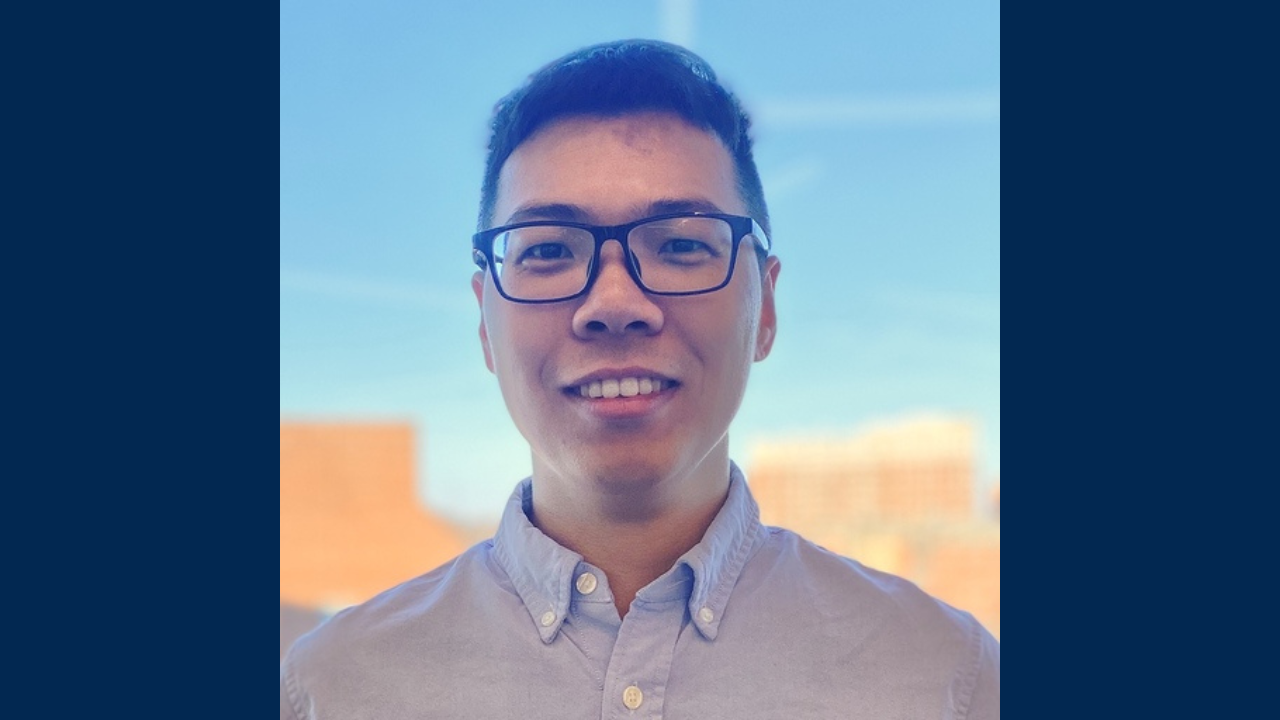
Lifeng Zhou, Assistant Professor, Drexel University
Abstract
Foundation models have changed what a robot can be asked to do, but not yet what it can be trusted to do in the field. Robots leaving factories and warehouses face novel objects, shifting tasks, degraded communication, and tight onboard memory and latency budgets. Neither classical model-based coordination nor cloud-hosted foundation models can handle these conditions on their own. In this talk, I will present my lab's work on building the missing layer between foundation models and reliable multirobot autonomy, one that is grounded, onboard, and provable where it counts. First, I will show how robot teams can coordinate through language. Influence-based consensus and a two-layer safety scheme let drone teams fly LLM-generated formations zero-shot, and let swarms forage without hundreds of compute-hours of parameter tuning. Second, I will describe how we bring foundation models onboard aerial and ground robots. A half-billion-parameter language model, grounded by retrieval and constrained decoding, raises dynamic-obstacle landing success from 34% to 96% on a 16 GB embedded computer. I will also discuss planning-aware occlusion reasoning and world models trained to rank plans correctly, which transfer zero-shot to a real ground robot. Third, I will discuss extending this recipe to manipulation, with vision-language-action policies grounded in physical quantities a camera cannot understand. I will close with a vision of agentic robot teams that move, fly, and manipulate.
Speaker Bio
Lifeng Zhou is an Assistant Professor in the Department of Electrical and Computer Engineering at Drexel University, where he directs the Drexel Zhou Lab. Before joining Drexel in 2022, he was a Postdoctoral Researcher in the GRASP Laboratory at the University of Pennsylvania. He received his Ph.D. in Electrical and Computer Engineering from Virginia Tech in 2020, his M.S. in Control Science and Engineering from Shanghai Jiao Tong University in 2016, and his B.S. in Automation from Huazhong University of Science and Technology in 2013. His research integrates robotics with foundation models, including large language models, vision-language models, vision-language-action models, and world models, to make robots and multi-robot teams robust, reliable, and scalable in the real world. Applications include search and rescue, precision agriculture, urban mobility, and agricultural processing. He is a recipient of the NSF CAREER Award. His work has received Best Paper Awards at ECCV 2026 and WACV 2025 workshops, as well as Best Paper Award nominations at IROS 2025 and DARS 2024. He serves as an Associate Editor for the IEEE International Conference on Robotics and Automation (ICRA).