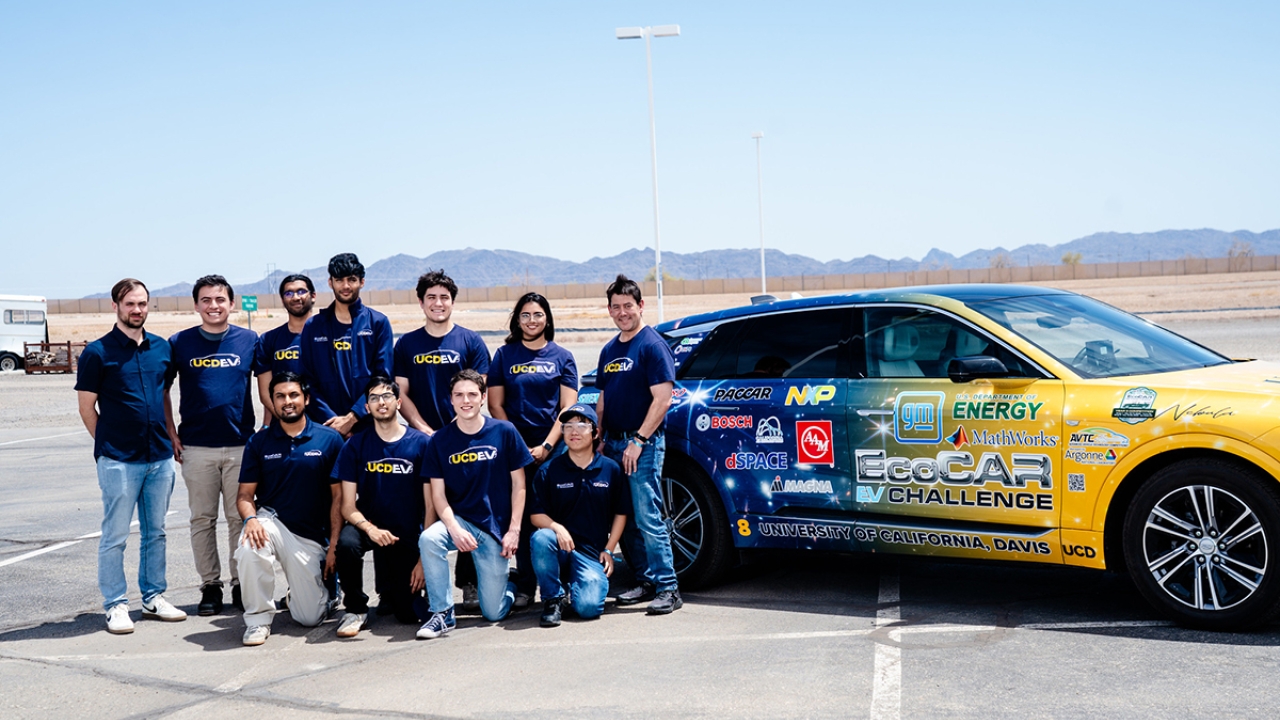
AutoHub Connecting Transportation, Technology & Talent
An interdisciplinary initiative to lead the future of sustainable mobility through hands-on learning, faculty research and industry partnerships

About
The AutoHub in the UC Davis College of Engineering brings together students, faculty and industry partners to integrate experiential learning with research in transforming mobility, strengthening climate resilience and revolutionizing energy systems. Through hands-on, team-based projects and real-world problem-solving, students gain sustained experience in designing and building complex systems, while faculty research directly informs their work.

Senior Design
Senior design is the culminating experience in our ABET-accredited engineering programs, where student teams solve real-world engineering challenges, fostering innovation and workforce development.

Student Research
Undergraduate and graduate students work with faculty mentors on original, open-ended investigations that generate new knowledge while building research skills through hands-on inquiry and scholarly contributions.

Design/Competition Teams
Formula Racing and Baja SAE provide hands-on engineering experiences where student teams design, build and test vehicles while developing technical expertise and leadership skills through national and international competition.

Industry & Partnerships
Partnerships connect students with real-world engineering challenges through sponsored projects, mentorship, industry-standard tools, community-engaged initiatives and professional conferences, strengthening workforce readiness.

Curriculum
Explore courses across engineering and related disciplines that prepare students for the future of automotive and transportation technology.
- FRS 1: High Performance Driving
- ENG 122: Introduction to Mechanical Vibrations
- EAE 127: Applied Aircraft Aerodynamics
- EME 134: Vehicle stability
- ECN 145: Transportation Economics
- ECI 162: Transportation infrastructure design
- ESP 163: Energy & environmental aspects of transportation
- EME 163: Internal Combustion
- ECI 164: Introduction to electric vehicles
- ECI 165: Transportation Policy
- EME 185/BAE 170: Capstone Senior Design
- EME/EAE 195: Special Topics Research
- EEC 195B: Autonomous vehicle design program
- TTP 210: Fundamentals of transportation technology
- ABT 212: A path to zero net energy
- ABT 298: Racing into the Future (Spring ‘27)
Course Spotlight
ABT 298: Racing into the Future (Spring ‘27)
Taught by the academic director of the DBESDC, Kurt Kornbluth, this course will use motorsports as a platform to engage undergraduate students in basic STEM concepts. Students will explore the science of race cars and high-performance driving, simulator exercises and the sustainable future of motorsports.
Faculty-Led Research
The AutoHub connects student learning directly to faculty-led research across three strategic themes:
🚗 Transforming Mobility
Sustainable Energy & Electrified Transportation
Autonomous, connected and human-centered vehicle systems across land, air and beyond
🌎 Strengthening Climate Resilience
Intelligent, Connected & Human-Centered Mobility
Resilient materials, infrastructure and systems designed for climate stressors
⚡ Revolutionizing Energy Systems
Resilient & Sustainable Transportation Systems
Electrification, energy efficiency, storage and decarbonized transportation
Featured Faculty

Alissa Kendall
Civil and Environmental Engineering
- Themes: Energy Systems, Decarbonized Mobility
- Research in Action: Lifecycle assessment of vehicles, fuels, batteries and infrastructure to guide transportation decarbonization.

Junshan Zhang
Electrical and Computer Engineering
- Themes: AI, Connected & Autonomous Vehicles
- Research in Action: Develops AI-driven methods for safe and intelligent autonomous vehicle systems.

Shima Nazari
Mechanical and Aerospace Engineering
- Themes: Electrified & Automated Vehicles, Vehicle Dynamics & Control
- Research in Action: Research on advanced control strategies for electrified and automated vehicles, improving performance, safety and energy efficiency across next-generation mobility platforms.

From Ground Up to Full Throttle: Inside Davis Baja Racing
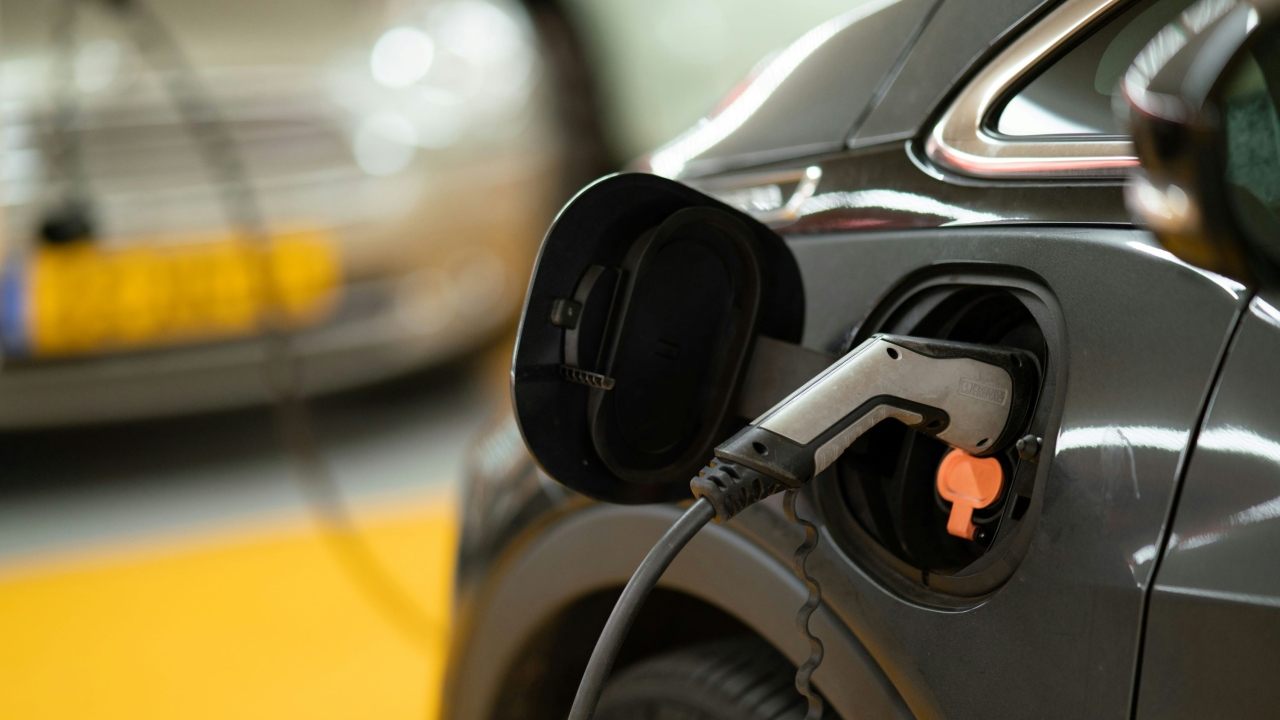
EPA Removal of Vehicle Emissions Limits Won’t Stop Shift to Electric Vehicles, but Will Make it Harder, Slower and More Expensive