Former Brain Tumor Patient Returns to UC Davis as Engineer, Instructor
At the age of 17, Robert Kobara found himself in a hospital bed at the UC Davis Medical Center, trying to make sense of his future. Still in his medical gown, recovering from brain tumor surgery, he wondered what would come next.
“At the time, I was a junior in high school, thinking, ‘Oh, I need to figure out what I want to do with my life,’” he said.
Then, he looked around his hospital room.
“I was like, ‘Huh, someone had to make all this equipment.’”
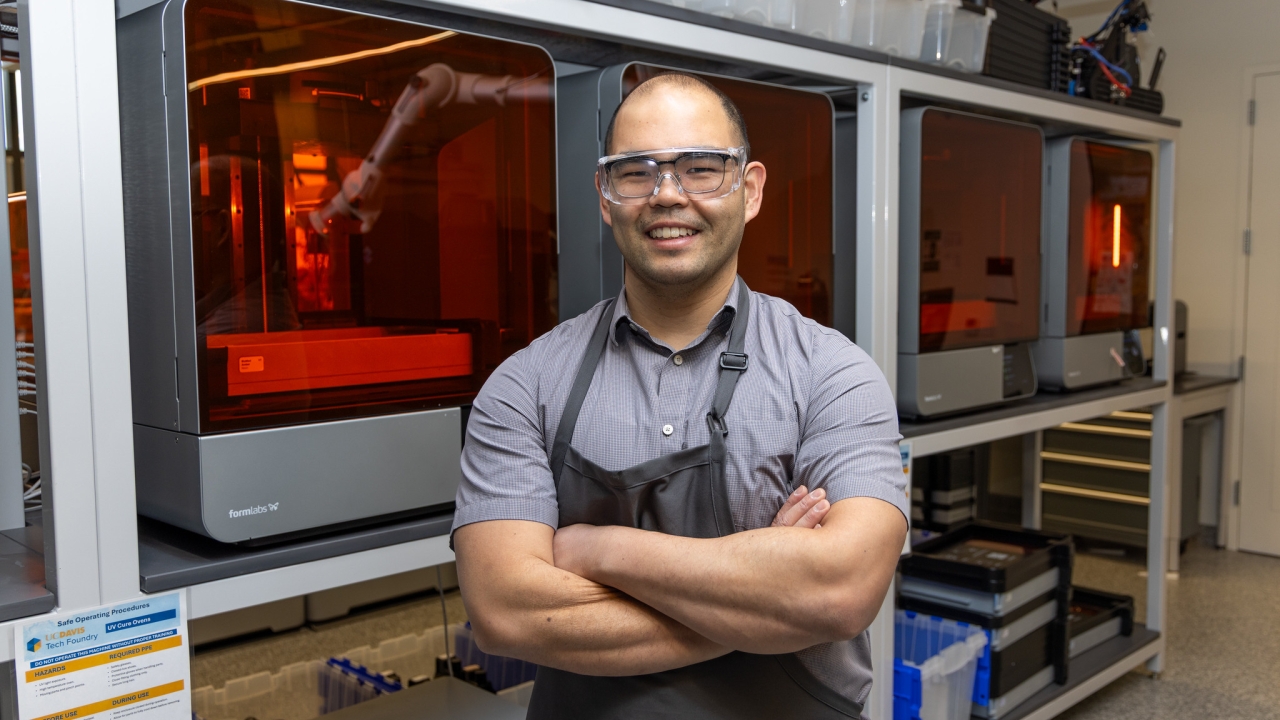
Nearly two decades later, Kobara returns to UC Davis with over eight years of industry experience in medical device development and manufacturing. In a dual appointment, he teaches engineering skills in the Master of Engineering in Medical Device Development program and creates new devices as a development engineer at Tech Foundry.
“This might be a little dramatic, but a job like this is why I got into biomedical engineering, like specifically this job,” he said. “I look outside, and it's like, ‘Oh yeah, I remember being in that hospital and recovering from surgery.’”
Fascination Grows
Kobara’s fascination with devices began in a surprising spot: near rows of lettuce, bok choy and cabbage on his family’s farm near Pismo Beach. More than the plants, Kobara was interested in the tools that helped his family run the farm.
“Following our mechanic around, seeing him solve all these little problems with the tractors, was always a cool moment for me,” he said.
This childlike wonder in seeing how things tick bloomed into a lifelong passion for engineering. It was only after he made a successful recovery from his brain tumor surgery that Kobara knew he wanted to be a biomedical engineer.
He earned a bachelor’s degree in biomedical engineering from Cal Poly San Luis Obispo, gaining first-hand experience in device design and manufacturing through cooperative education placements at St. Jude Medical and Alcon Laboratories.
To broaden his engineering expertise, he pursued a master’s degree in mechanical engineering at Stanford University, pushing himself to specialize in devices that combine mechanical systems with electronics and computing.
Following a successful internship with Intuitive Surgical, Kobara joined the biotechnology company as a full-time employee. Intuitive Surgical is best known for the da Vinci surgical system, a robotic platform for minimally invasive surgical procedures. Kobara worked his way up to a senior mechanical engineering position, establishing manufacturing processes and designing custom equipment to reduce production errors.
All this experience, from education to industry, he cultivated for his dream of one day working as a biomedical engineer serving clinicians at a hospital. Then, one day, he saw an opening in the UC Davis Department of Biomedical Engineering.

Engineering/Teaching
Kobara originally applied to be a development engineer at Tech Foundry, a facility within the biomedical engineering department that designs and manufactures devices to support research and solve problems. The facility has two locations, with one at the Aggie Square campus mere minutes from where Kobara had an a-ha moment as a teenager. That’s where he knew he wanted to work.
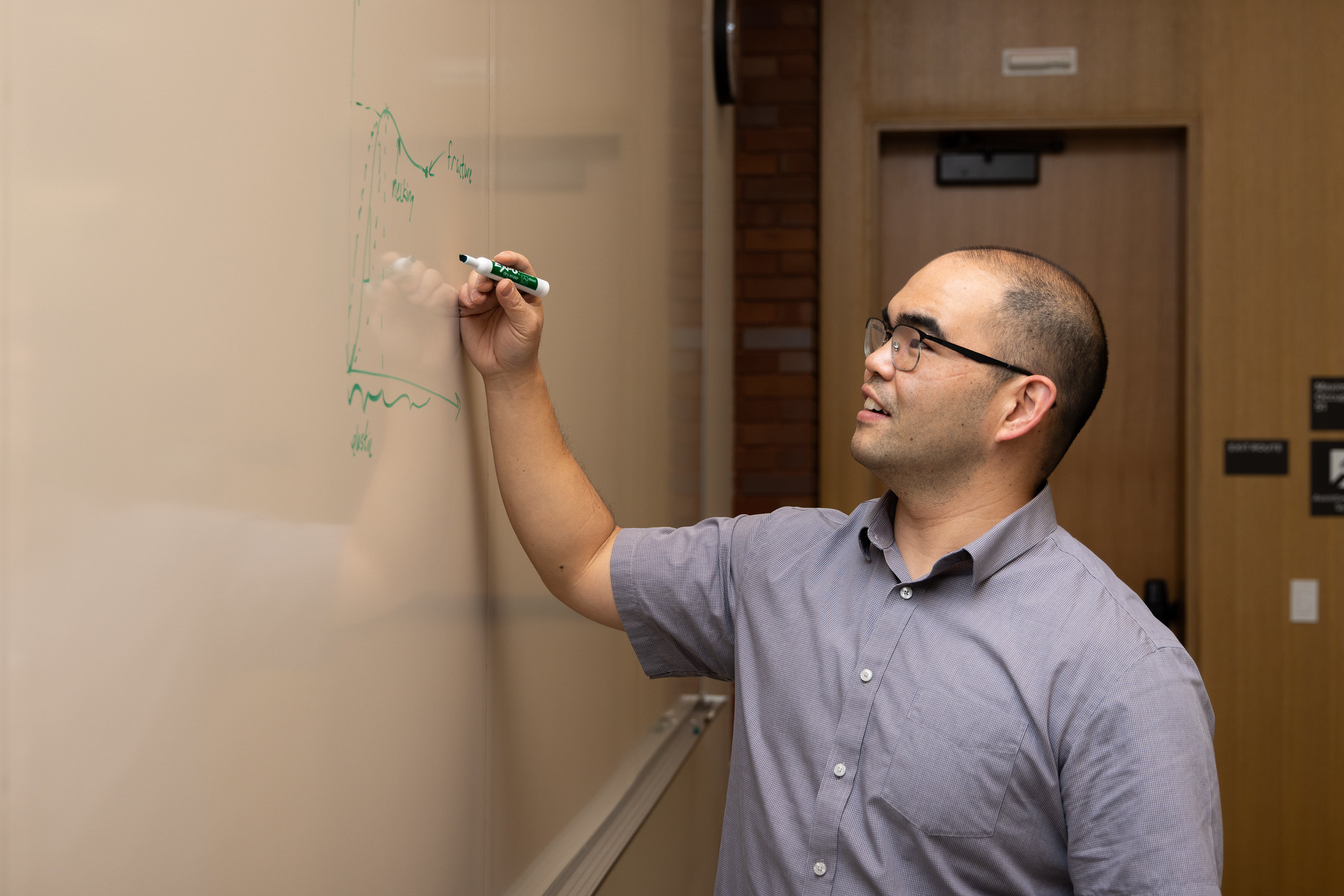
He interviewed for the position and was met with a surprising counter. He was told that he would be a better fit for a new role in the department: a dual position split between design and manufacturing work with Tech Foundry and teaching classes on engineering skills to students pursuing their Master of Engineering in Medical Device Development. The graduate program is also based at Aggie Square, with classes taught amidst 3D printers, lathes, CNC mills and more at Tech Foundry.
At first, the offer gave him pause. He had mentored engineers at Intuitive Surgical and had worked as a teaching assistant while a student at Stanford. He had even coached high school football as an undergraduate at Cal Poly SLO. Still, teaching graduate students felt like a completely new responsibility.
He turned to his wife for advice, a current school librarian and former middle school teacher. She would tell him if he was up to the task or not.
“She’s like, ‘Yeah, no, you can do this,'” he said, smiling. "'Just take your enthusiasm and bring it into the classroom.'"
Kobara went for it, following her advice to trust his passion for engineering. And this appeal to centering joy is a guiding light for what he wants to teach his students. While his classes teach skills in areas from programming to rapid prototyping, looking at the big picture, he wants his students to learn how to embrace curiosity and find the fun when they inevitably approach an unfamiliar problem.
“They’re not going to know everything, but it’s how you respond to the times when you don’t know, and how you work your way through it,” he said.
His advice? Break the problem down into manageable pieces, working through the parts most understandable first.
A big surprise to Kobara is that he is actively applying his own advice to his position with Tech Foundry. The device development facility is equipped with advanced tools and technologies he’s never seen before, despite his eight years of experience in industry. Much of his working time has been spent learning about the new machines.
“There’s so much to learn,” he said. “It’s like I’ve only scratched the surface.”
For Kobara, who gets to do all of this in the place that inspired him to become a biomedical engineer, that’s nothing but a dream come true.