



UC Davis Engineers Collaborate on Rare Epilepsy Study
Development engineers and a biomedical engineering graduate student from the University of California, Davis, were part of an epilepsy study granting scientists a rare glimpse into how the human brain navigates space.
Led by Professor of Neurology Jack Lin, the research followed Travis Rouse, a 22-year-old who has a device in his brain to manage epilepsy. The implanted device allowed the team of UC Davis researchers to observe neurons firing in real time as Rouse walked through hallways, tasked with remembering the specific locations of images hung on the wall.
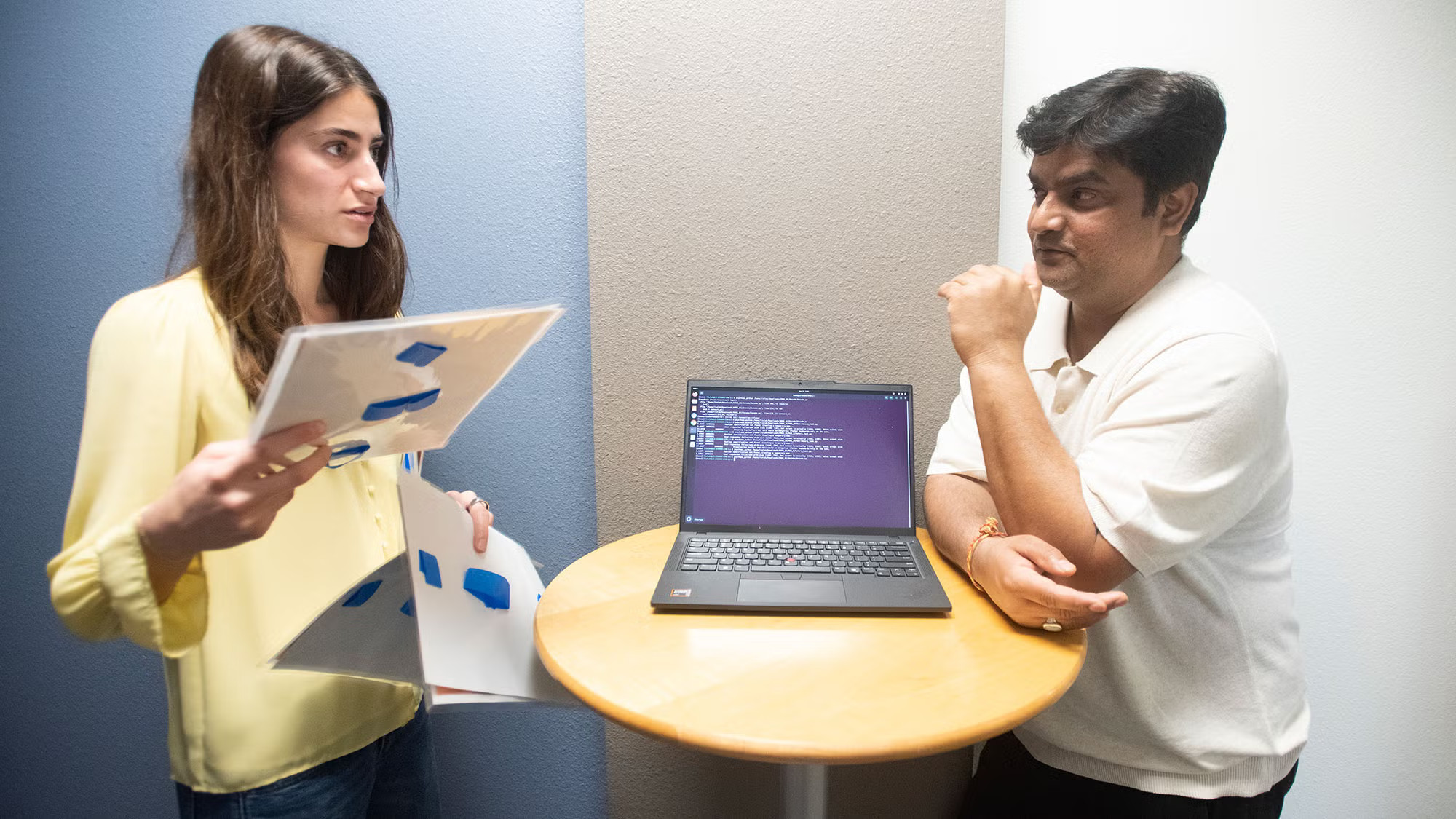
Maria Tangalos, a biomedical engineering Ph.D. student in Lin’s lab, helped design and run the experiment. She watched the neuronal data streaming into her laptop as Rouse navigated space.
Development engineers from UC Davis Tech Foundry at Aggie Square created the backpack and headgear that enabled the experiment. Tech Foundry, which also has a location on the UC Davis campus, is part of the Department of Biomedical Engineering.
Besides expanding basic understanding of navigation and memory, this research could be the foundation of future treatments for debilitating conditions like dementia or Alzheimer’s. Both conditions leave people both forgetting and getting lost.


