Blog: Step Into the Unknown, Take the Out-of-State Internship

Meet Roanna Pham
I am a fourth-year chemical engineering major, student researcher in the Zhao Lab, the presidential advisor of AIChE and an Engineering Ambassador.
This past summer, I shipped off to a small town in Iowa to participate in a reliability engineering internship at Advanced Technology Solutions, or ATS.
My role as an intern was to support predictive maintenance efforts in manufacturing facilities. But before this internship, I had no idea what predictive maintenance even was.
Now I know that predictive maintenance looks for early signs of failure in active equipment to provide alerts about potential interruptions in the manufacturing process before they happen. At ATS, two major tools we used to find those warning signs are infrared thermography and vibration analysis.
During this internship, I worked alongside technicians to collect equipment health data in the field and later developed a machine-learning system to streamline vibration report review. Most importantly, I stepped outside my comfort zone to explore an unfamiliar area of engineering and learned a lot about both engineering and myself.
(Infra)Red Flags in Machine Parts
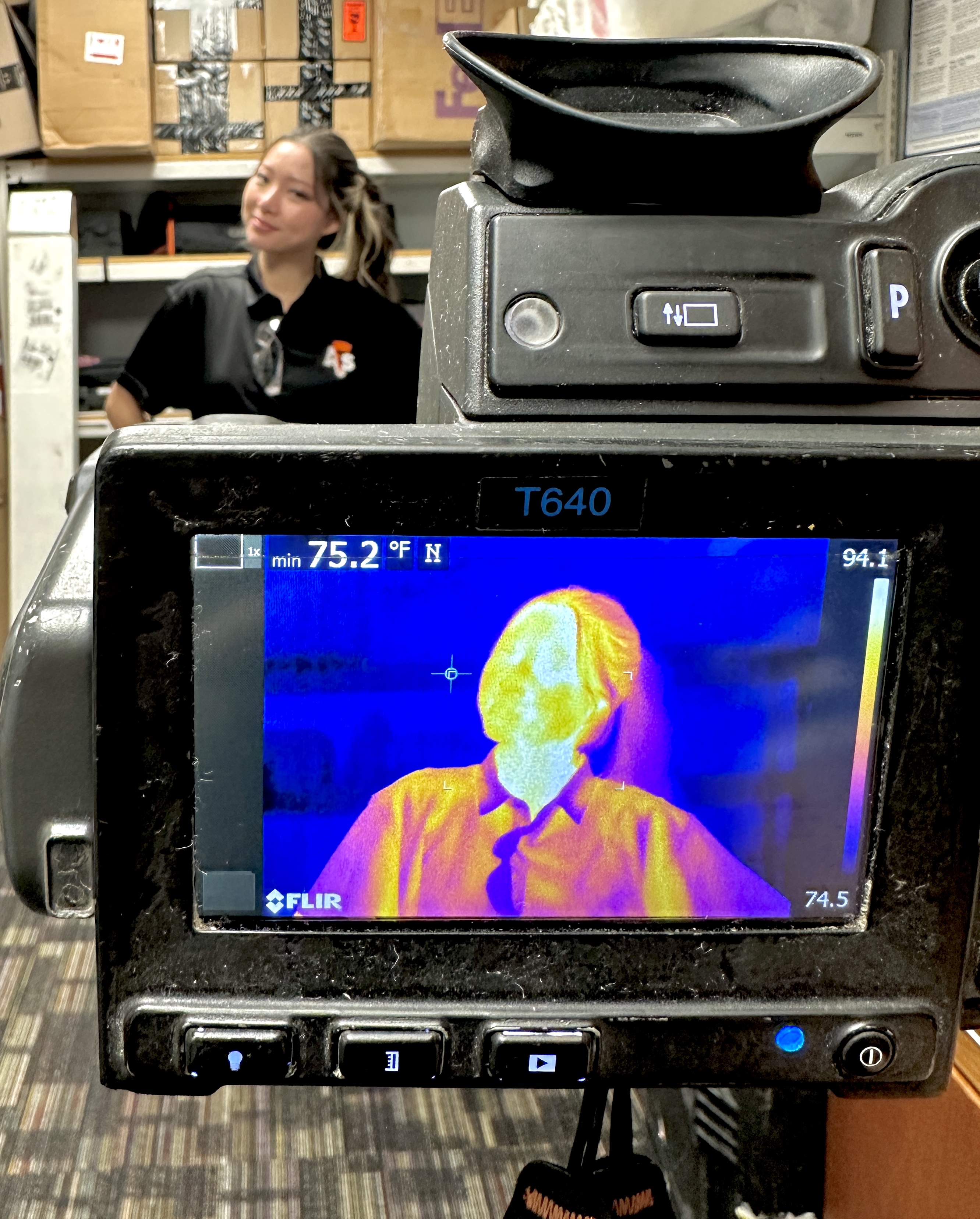
My first opportunities to see predictive maintenance in action came through infrared inspections. I donned my protective gear and joined ATS technicians, walking through manufacturing facilities while scanning electrical panels with a FLIR T640 infrared camera.
The camera converts infrared radiation into a thermal image, allowing us to compare temperatures in real time. Rather than simply looking for something hot, we looked for abnormal differences between similar components. For example, if one connection in a three-phase electrical system was significantly hotter than the others, it could indicate unwanted resistance, connection issues or other problems.
Walking through an active manufacturing plant puts the importance of predictive maintenance into perspective. A single failed component can interrupt an entire manufacturing process, so catching problems early can make all the difference.
Vibe Check
ATS technicians also collected vibration data from rotating equipment to identify developing mechanical problems and assign priorities from one through four based on urgency, with one being the top priority.
Streamlining this vibration prioritizing process became my next major project. Using thousands of previous vibration reports, I coded and trained a machine-learning system to analyze vibration frequency spectra and recommendations within a report and predict its priority. I then turned the model into a tool the report team could easily use in their day-to-day work.
Why Iowa? Why Not?
You may be wondering, “What does this have to do with chemical engineering?” and “How did she end up in Iowa all the way from Davis?”
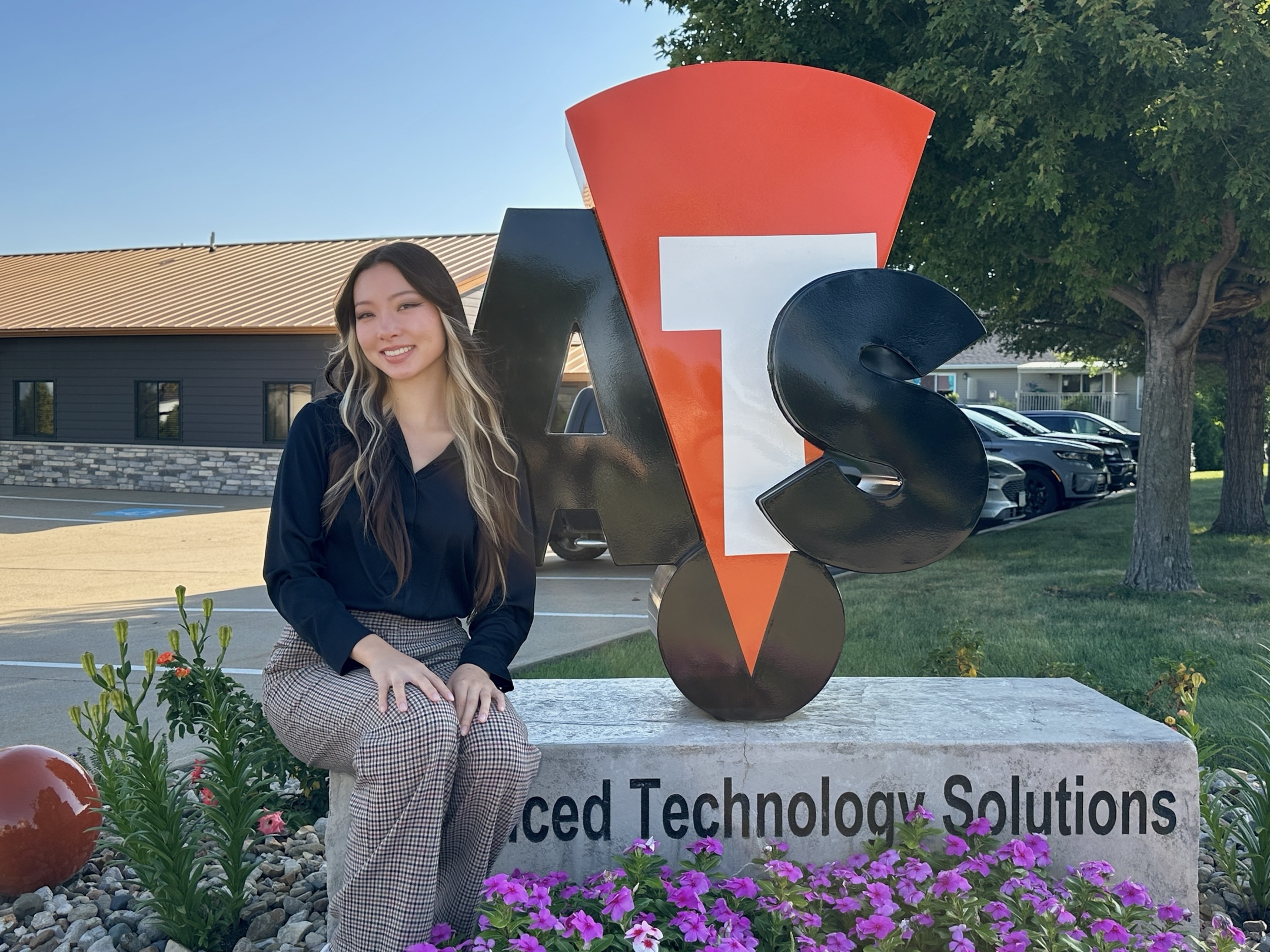
For most of my time at UC Davis, I have stayed comfortably within my chemical engineering bubble. As a research assistant in the labs of Atul Parikh, professor of biomedical engineering, and Kevin Zhongchao Zhao, assistant professor of chemical engineering, I worked with cell-mimetic compartments and virus-like nanoparticles, discovering my love of hands-on engineering. I had spent years engineering at the nanoscale, but for my internship, I wanted to go macro.
Around the beginning of my internship search, I was taking “Chemical Engineering Thermodynamics Laboratory” with Jiandi Wan, associate professor of chemical engineering. I realized I enjoyed understanding a system, collecting and analyzing data and figuring out how it can operate better. That was what connected chemical engineering to reliability engineering for me; the scale was different, but the core was the same.
So, when I found a reliability engineering internship in Iowa, I figured, why not?
And why Iowa? I really like corn. No, I’m joking (mostly). I had always wanted to visit Iowa, and when my internship search in California was coming up dry, I decided to shoot my shot somewhere I otherwise would never have had the chance to go. It was my last summer of college, so I thought I might as well make it interesting.
I am extremely glad I did. Professionally, I learned to use infrared cameras, interpret vibration data, and build a machine-learning application. Personally, I accumulated quite the list of firsts: my first state fair, my first time curling, my first tornado warning and my first non-Aggie college football game (go Hawkeyes). None of those would have happened if I had limited internships to what felt familiar.
Take the Leap
My biggest piece of advice to students looking for internships is to give yourself permission to apply outside your comfort zone. You certainly do not have to send yourself to the middle of Iowa, but an internship does not need to perfectly match everything you have already done to be worthwhile.
Will I continue to pursue reliability engineering after college? I honestly don’t know. There are still so many areas within and outside of chemical engineering that I want to explore. But I now know considerably more about machines, vibration analysis and software development than I did before I left Davis. So, step into the unknown: Go somewhere new for the summer, learn something completely different and take that out-of-state internship.