2 Engineering Professors Named Chancellor’s Fellows
Associate Professor of Electrical and Computer Engineering Marina Radulaski and Associate Professor of Computer Science Mohammad Sadoghi are among this year’s class of Chancellor’s Fellows at the University of California, Davis. The distinction is given annually to early-career academics who are doing exemplary work in their fields.
The Chancellor’s Fellows program, created in 2000, awards $25,000 in unrestricted philanthropic funding to support the recipients’ research or scholarly work. Chancellor’s Fellows awards are supported by private contributions to the UC Davis Annual Fund, Parents Fund and Davis Chancellor's Club Fund.
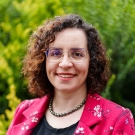
Marina Radulaski
Electrical and Computer Engineering
Radulaski leads the UC Davis Laboratory for Quantum Nanophotonics. Bridging engineering, physics and material sciences, her research involves the interaction of light and materials at extremely small scales. Radulaski’s work has applications in quantum hardware for networking and simulation, as well as in the near-term use of quantum computers.
Radulaski’s research has attracted numerous awards and grants. She founded the UC Davis Quantum Information Science and Technology, or QuIST, initiative, which crosses departments and colleges, and also mentors student clubs in optics, quantum science and for female engineers.
“Professor Marina Radulaski exemplifies the very best of UC Davis,” wrote Professor Saif Islam, chair of the Department of Electrical and Computer Engineering, in nominating her for the award.

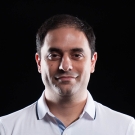
Mohammad Sadoghi
Computer Science
Sadoghi’s work focuses on large-scale databases, distributed ledgers and blockchains. These systems distribute data across many computer systems, which must agree on what the data are, even if the systems do not necessarily “trust” each other. His work has implications not only for data verification but also for how computer systems and the technology industry understand and implement laws governing data security and privacy.
Sadoghi founded Apache ResilientDB, a distributed ledger built on a democratic, decentralized computer model. His recent book, The Problems of Consensus: An Ethical Inquiry into Democratic and Decentralized Principles, explores the concept of consensus, weaving together ethical, epistemological, theological, sociological and computational perspectives into a unified dialogue.
“[Sadoghi’s] work is at once principled and practical: He rethinks consensus from first principles, proves what is possible under realistic assumptions and then transforms those ideas into robust open-source systems,” wrote Amr El Abbadi, Distinguished Professor of computer science at UC Santa Barbara, in support of Sadoghi’s nomination.