UC Office of the President Celebrates 2 Engineering Professors for Outstanding Early Career Research
The UC Office of the President has selected two engineering professors from the University of California, Davis, for its inaugural Early Career Faculty Research Excellence Awards. They are Hyoyoung Jeong, an assistant professor of electrical and computer engineering, and Jie Zheng, an assistant professor of biomedical engineering and neurological surgery.
The UCOP Early Career Faculty Research Excellence Awards seek to advance the university’s commitment to the scholarship and creative activity of early career faculty across all 10 UC campuses. There are 60 total awardees, with recipients receiving a $50,000 prize to support their research.

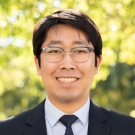
Hyoyoung Jeong
Electrical and Computer Engineering
Jeong, an expert in autonomous wireless electronics, will focus on creating a device that detects and mitigates seizures in children with pediatric epilepsy. He plans to combine a biodegradable, wireless device implanted inside the skull paired with an “electronic tattoo” — a device attached to the skin. The tattoo would detect seizures and power the implant to deliver pulses to the brain.
“Current epilepsy technologies are largely designed for adults and are not suitable for pediatric patients due to anatomical mismatch, infection risks from transdermal electrodes, repeated surgeries, and device failure caused by growth-related strain,” he wrote. “These limitations create a critical gap in care during the early developmental years.”
The implant would be designed to dissolve into biocompatible byproducts when triggered by an external electromagnet or other device once the child is old enough for a permanent form of treatment.
Jeong noted that epilepsy is the most prevalent — and comes with the most severe consequences — in infants and children.
His project is titled, “Establishing Growth-Accommodating, Biodegradable Neuromodulation Systems for Children with Epilepsy.”
Jeong joined UC Davis in 2022 after a postdoctoral fellowship at Northwestern University.

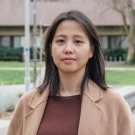
Jie Zheng
Biomedical Engineering
Zheng plans to focus on learning more about the way the midbrain, or the topmost part of the brainstem, contributes to our ability to form and retrieve memories.
She writes that her focus will be on the specific part of the midbrain called the substantia nigra, which plays a large role in the release of dopamine. Her project will use deep brain stimulation surgery to implant special probes that can record hundreds of neurons at once, then conducting memory tasks involving video clips.
“We focus on event boundaries — transitions between sequential events, such as finishing one chapter of a book and starting another — where the brain naturally reorganizes and stabilizes memory,” Zheng wrote in her application.
The project will also explore how electrical stimulation of the midbrain region changes memory outcomes.
The project “will generate critical insights into midbrain contributions to memory — a domain where human studies remain scarce — while establishing a technical platform for research previously considered infeasible,” she wrote.
Her project is titled “Cellular Precision Neural Interfaces for Midbrain Modulation and Memory Enhancement.”
Zheng joined UC Davis in 2024 after a postdoctoral fellowship at Boston Children's Hospital, Harvard Medical School.