


The Women Machinists’ Club Turns Curiosity into Confidence
When Lena Araya and Lydia Miteza first arrived at the University of California, Davis, neither planned to major in mechanical engineering.
What ultimately drew them both into engineering were the hands-on making opportunities and the inclusive, welcoming environment of the Women Machinists’ Club, or WMC.

Founded to make machining and fabrication more accessible to women and other underrepresented groups, WMC is a space where all students, no matter their background or major, can explore engineering through practical experience.
For Araya and Miteza, the club’s primary leader and secondary leader, respectively, WMC transformed their curiosity into the confidence to pursue engineering.
When asked to sum up the club’s impact on her life, Araya put it simply: “If I had to describe the Women Machinists’ Club in one word, I’d say ‘empowering.’”
“Even doing just one workshop and creating something from scratch makes you feel like you can make anything,” Miteza agreed. “It’s a huge confidence builder.”
From Curiosity to Commitment
Both officers first encountered WMC through beginner-friendly workshops.
For Araya, who came to UC Davis as an environmental science major and later switched to civil engineering before settling on mechanical engineering, joining a woodworking workshop as a first-year student sparked a growing fascination with hands-on making.
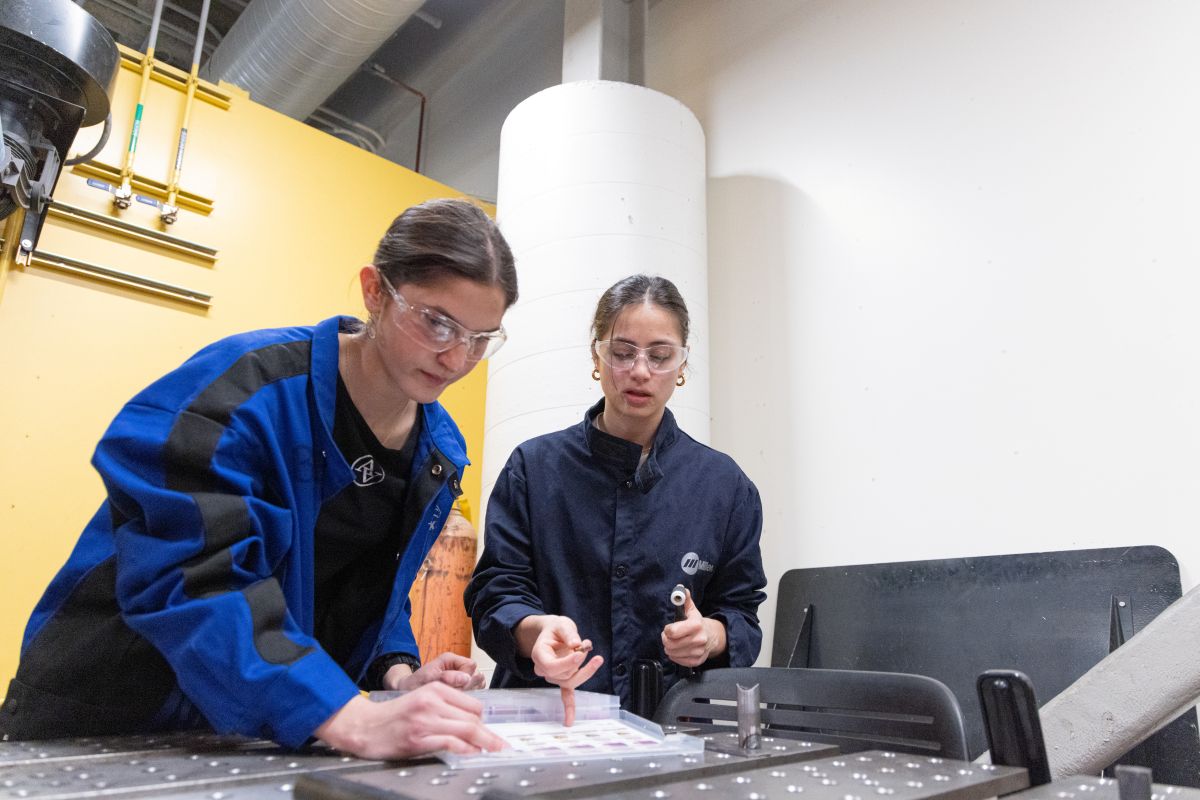
As she gained experience in machining and fabrication, she began analyzing how objects were made and imagining how she could recreate them herself. This perspective strengthened her interest in engineering and built confidence in her own abilities, inspiring her to become more involved in WMC’s leadership.
Miteza entered UC Davis as an economics major with little prior exposure to manufacturing or machining. When she began considering engineering, she was drawn to the subject's scientific and mathematical foundations but was unsure whether she would enjoy working in unfamiliar, at times intimidating, fabrication spaces.
That uncertainty began to shift during her sophomore year after meeting Araya in a math course. When Araya mentioned her involvement with the Women Machinists’ Club, Miteza was immediately intrigued by the idea of a space dedicated to accessible, hands-on making. Near the end of that year, she attended a WMC woodworking workshop and discovered unexpected enjoyment in the physical, creative aspects of engineering. The experience helped bridge the gap between theory and practice.
“When I switched into engineering, I was doing math and physics,” she said. “But I wasn’t sure if the actual manufacturing side was for me. The club made that space feel accessible and inclusive.”
Making Manufacturing Inclusive for All
Miteza and Araya want to keep WMC’s focus on inclusivity. Workshops are intentionally designed to be beginner-friendly, with no assumed prior experience, reflecting the club’s commitment to creating accessible entry points into machining and fabrication.
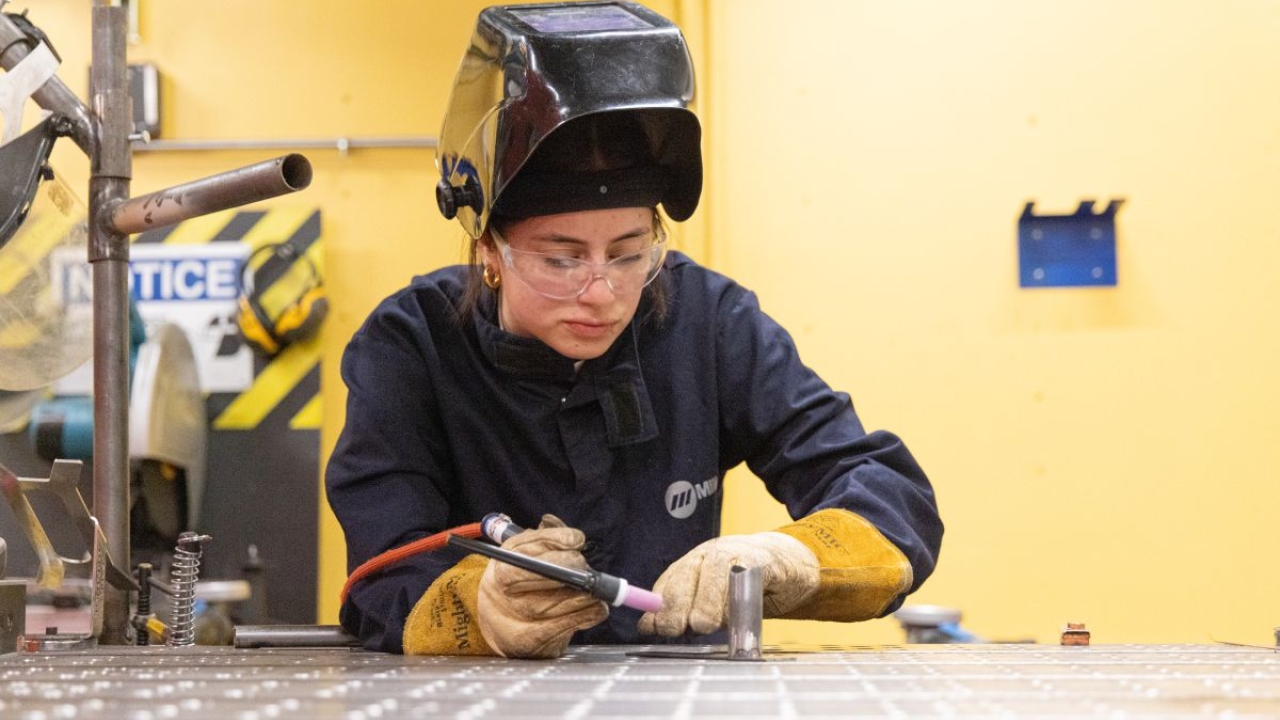
The club currently hosts up to four workshops per quarter. They are held either at the Diane Bryant Engineering Student Design Center, where officers help newcomers navigate the required training processes, or other broadly accessible campus spaces like the Western Center for Agricultural Equipment, a Department of Biological and Agricultural Engineering facility that supports hands-on training, research and education related to agricultural tools, machinery and workplace safety. By hosting workshops at the center — including welding and fabrication events — WMC creates an accessible learning environment, welcoming students regardless of major or prior experience.

Popular workshops include woodworking, welding, laser cutting and even tractor-driving simulations.
Woodworking and welding workshops, particularly, draw the largest crowds, in part because the skills and outcomes are easy for newcomers to visualize. In these sessions, participants learn foundational fabrication techniques, such as measuring, cutting, assembling materials or laying basic welds, while producing tangible items they can take home. According to Araya and Miteza, these workshops tend to have higher turnout because students understand what the process will involve, making the experience feel approachable rather than anxiety-inducing.
While other workshops, like laser-cutting and CAD, are still offered, the club has found that broadly recognizable, hands-on projects lower the barrier to entry.
“I think a lot more people understand what woodworking would entail,” Miteza said, emphasizing that having clear expectations of the process and final outcome of a workshop plays a key role in encouraging students to step into fabrication spaces for the first time.
Building Skills and Confidence
WMC emphasizes skill-building in an environment designed to feel supportive and minimize potential intimidating factors.
Officers intentionally pace workshops slowly, explaining not just how to do something but why each step matters, helping participants build understanding rather than simply following instructions. Experienced members circulate to answer questions without judgment, safety procedures are explained collaboratively rather than enforced punitively, and officers actively normalize asking questions or making mistakes.
By removing assumptions about prior knowledge and fostering peer-to-peer support, WMC lowers the barriers that often keep students out of hands-on engineering environments and help them develop confidence in navigating workshop spaces that can feel unapproachable to beginners. This culture allows members to move from curiosity to competence, setting the stage for personal growth stories like those of Miteza and Araya.
At its core, the Women Machinists’ Club remains a space where learning happens through making, confidence grows through practice, and engineering feels approachable for all students, regardless of where they started.


