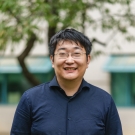
Artificial intelligence models can now build and train new models with minimal human intervention thanks to a collaborative project spearheaded by Silicon Valley-based startup Aizip and its co-founder Yubei Chen, an assistant professor at the University of California, Davis.
A multidisciplinary research team in communication and computer science at the University of California, Davis, performed a systematic audit of YouTube’s video recommendations in 2021 and 2022. They tested how a person’s ideological leaning might affect what videos YouTube’s algorithms recommend to them.
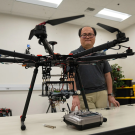
The CITRIS principal investigator and biological and agricultural engineering professor harnesses robotic and automated technology to optimize designs, systems and processes in agriculture and beyond.
Materials science and engineering professor Marina Leite has received $1 million to make switchable photonic devices more efficient with hybrid perovskites, a class of materials with physical properties that can be controlled through light alone.
As large language models like ChatGPT become more integrated into the human experience, Assistant Professor of Computer Science Muhao Chen wants to ensure that these tools are reliable, credible and protected.
Modeling computers after the human brain — coding in electrical impulses instead of ones and zeroes — promises advanced problem-solving skills and low energy consumption.
AI has affected numerous job markets with Goldman Sachs economists estimating that 300 million jobs across the globe could be automated by AI. However, AI is not always better, faster or cheaper with current iterations prone to mistakes or false information.
Typically, the primary indicator of a burgeoning wildfire in California is a plume of hazy, gray smoke wafting through the air, seen by satellites or cameras. The California Department of Forestry and Fire Protection, or CalFire, is alerted, and mitigation and containment efforts ensue.
Chen explores computational neuroscience and deep unsupervised learning to build simple-to-explain and efficient artificial intelligence models. His goal? To create an AI that can dream.
You’re on a long road trip. You’re enjoying your favorite tunes as your self-driving car moves you down the road. Then suddenly, a driver going in the other direction swerves into oncoming traffic right at you. Will the artificial intelligence, or AI, in the car have enough time to react and save you from a head-on crash?