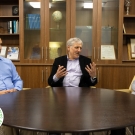
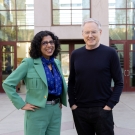
Dean Richard L. Corsi sits down with Professor of Computer Science Ian Davidson and Professor of Electrical and Computer Engineering Chen-Nee Chuah to discuss the current and near-future roles of artificial intelligence and its real and anticipated implications for society.
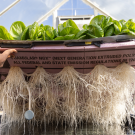
Assistant Professor of Biological and Agricultural Engineering Shamim Ahamed leads a technical assistance and educational effort for the soilless approach to agriculture in the Golden State. The method lets farmers get more out of their water and put less pressure on the state water budget.
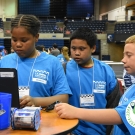
At the UC Davis College of Engineering, the concept of "engineering for all" is more than a slogan — it is a call to action, exemplified by programs like Cheng’s Center for Integrated Computing and Science, Technology, Engineering and Math Education.
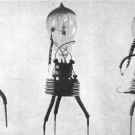
In the Department of Electrical and Computer Engineering at UC Davis, a one-of-a-kind hub for vacuum electronic devices allows a community of researchers to build upon the past to discover the future.
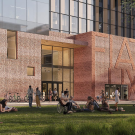
A few miles southeast of Downtown Sacramento, amidst world-class hospitals, research buildings and teaching facilities, biomedical engineers are helping shape the future of research, scholarship and entrepreneurship at UC Davis.
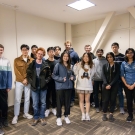
The club at UC Davis has coded its way to compete in the 2025 ICPC North American Championship. Their strategy for success? Practice, teamwork and camaraderie with "fellow nerds."
On January 16, the UC Davis Artificial Intelligence Center in Engineering hosted its inaugural AI distinguished speaker, Microsoft Chief Scientific Officer Eric Horvitz, for a dynamic discussion on AI and society.
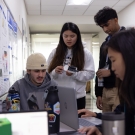
The annual UC Davis event, hosted by the Biomedical Engineering Society and the Translating Engineering Advances to Medicine Lab, allows undergraduates to apply their engineering skills and receive hands-on experience in product design and prototyping.
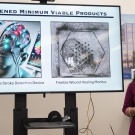
The Quarter at Aggie Square Biomedical Engineering cohort wrapped up their 10-week experience with a presentation of three medical prototypes for growth-accommodating heart valves, noninvasive glucose monitors and stroke-detection devices. The students chose the concepts to solve complex health challenges they encountered.
In the UC Davis College of Engineering course "Hacking 4 Climate," teams of students tackle real-world environmental issues, from soil health to wildfires to solar energy for all, with an entrepreneurial angle, aiming to find impactful business-based solutions to global problems.