NIH Grant to Fund Innovative Bladder Repair Option for Children
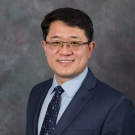
Professor of Biomedical Engineering Aijun Wang co-leads a $4 million grant from the National Institutes of Health to test a bioengineered graft infused with molecules to treat neuropathic bladders of children with spina bifida or spinal cord injuries.
A neuropathic bladder is caused by dysfunctional nerve messaging between the nervous system and the bladder. The condition results in bladder control issues and kidney disease.
To treat these conditions, a surgeon performs enterocystoplasty, a procedure where parts of the intestine or stomach are used as a graft to enlarge the bladder. The surgery requires an extensive abdominal operation and can have many short- and long-term complications.
Rather than use stomach or intestinal tissue, the UC Davis team is looking to use bioengineered tissue as a graft during enterocystoplasty.
Wang, an expert in designing and testing supportive structures called scaffolds, has developed a scaffold made of engineered biomaterial modified with a ligand (special molecule known as LXW7) that specifically interacts with endothelial cells that help vascularization. The ligand, developed at UC Davis, helps the cells’ attachment, migration and survival, which promotes the formation of new blood vessels and reduces graft complications.
“Adding newer bioengineering technologies, such as the ligand technology, will help in microvascular regeneration of the whole bladder matrix and nearby muscle cells,” Wang said.
To realize this project, Wang is collaborating with Dr. Eric Kurzrock, a pediatric urologic surgeon at UC Davis Health who has been developing and testing grafts to avoid the complications after standard enterocystoplasty for more than two decades.