UC Davis, Mango Materials Partner to Advance Affordable Bioplastics from Methane
What if the methane from landfills and wastewater treatment plants could become an affordable raw material for sustainable plastics?
Some naturally occurring bacteria, called methanotrophs, can consume methane and use its carbon to produce biodegradable plastics, which are stored inside their cells. But producing plastic is only part of the puzzle. Recovering and purifying it from the bacteria contributes significantly to costs; thus, reducing these costs can help make methane-derived bioplastics economically competitive with conventional plastics.
Researchers at the University of California, Davis, are partnering with sustainable materials company Mango Materials to approach the challenge. The collaboration is supported by funding from the National Science Foundation and BioMADE, an institute of Manufacturing USA focused on building a domestic bioindustrial manufacturing ecosystem.
The project will combine the university’s expertise in microbial engineering with Mango Materials’ established process for transforming waste methane into biodegradable materials. This partnership will also give UC Davis researchers and students opportunities to test their work on an industrial scale beyond what is available in university research labs.

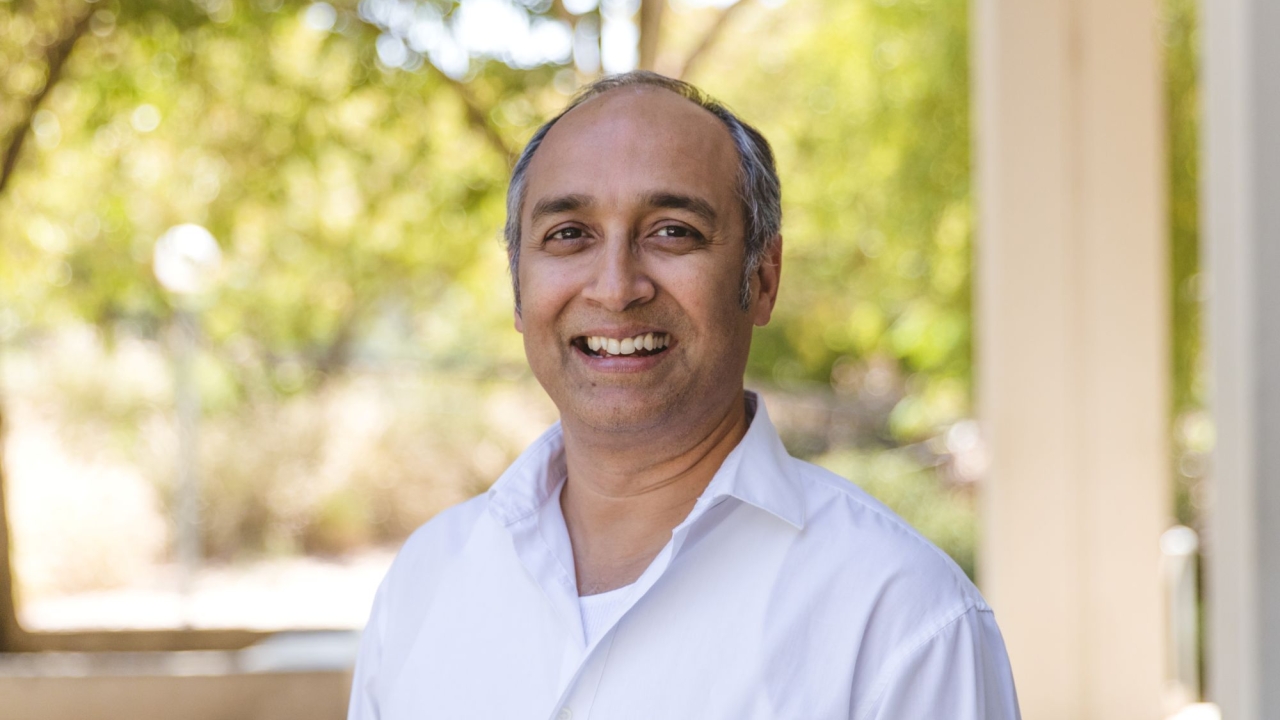
Yi Wang, an assistant professor of biological and agricultural engineering at UC Davis, will genetically engineer methanotrophs so that the plastics they produce can be recovered more efficiently. This will reduce the time and energy — and thus, the cost — required to separate the plastic from proteins and other cellular material, a process known as downstream processing.
“The downstream purification process is a major part of the cost,” Wang said. “If we can make that process more efficient, we can make the whole process more economical.”
Mango Materials does not currently use genetically modified methanotrophs in its process. Instead, the company uses natural selection to develop bacteria that produce biodegradable plastics called polyhydroxyalkanoates, or PHAs. The company co-locates its factories with sources of waste methane, such as wastewater treatment plants and agricultural facilities. The PHAs produced by the bacteria are extracted and converted into polymer pellets that can enter existing plastic supply chains.
“Mango Materials’ mission is to transform waste methane into useful, biodegradable materials,” said Molly Morse, CEO of Mango Materials. “This collaboration brings together UC Davis’ strengths in microbial engineering with Mango Materials’ methane-to-PHA platform, helping us explore new ways to make sustainable materials more competitive and widely available.”
Building Better Bacteria
Methanotrophs’ ability to use methane as a carbon and energy source makes them attractive for industrial biomanufacturing. However, unlike well-studied bacteria such as E. coli, methanotrophs have relatively few established genetic tools and are generally harder to engineer.

Wang will develop CRISPR-Cas genome-editing systems tailored to these organisms to enable efficient, targeted genetic modifications. Using these systems, Wang will engineer the bacteria so that the bioplastic they produce can be more easily separated and purified from the cells after fermentation.
“Most genetic engineering focuses on getting microbes to make more product,” Wang said. “By designing cells with product recovery in mind, we hope to reduce reliance in biomanufacturing on energy-intensive equipment or chemical-intensive purification steps, helping move bioproducts closer to cost parity with conventional products.”
Mango Materials will then evaluate the UC Davis-engineered methanotrophs using its proprietary method to convert methane into bioplastics. They will begin in small-batch cultures, then in lab-scale fermenters and ultimately in Mango Materials’ 5,000-liter bioreactor, which is connected to a wastewater treatment plant that supplies methane as the fermentation feedstock.
The company will test growth, PHA production and downstream processing performance, then provide feedback to Wang and his team to guide further modifications to the bacteria. Mango Materials will also analyze the economic and environmental impacts of the genetically modified methanotrophs.
“Downstream processing is one of the most important challenges in scaling biomanufacturing,” said Allison Pieja, chief technology officer of Mango Materials. “By testing engineered strains from the lab through pilot-scale systems, we can learn quickly which biological design strategies translate into practical manufacturing improvements.”
Growing the Bioindustry Together
For Wang, working directly with Mango Materials connects his fundamental research to real-world industry needs while giving students firsthand experience translating discoveries from the lab to manufacturing environments.
That experience can help prepare students to enter the fast-growing biomanufacturing workforce. BioMADE estimates that the U.S. bioindustrial economy could support at least 1 million jobs by 2030 and will need graduates who understand the science and realities of biomanufacturing.
“Collaborating with companies really opens your eyes,” he said. “We do a lot of fundamental research, but really, the ultimate goal is to make things that are useful and benefit human beings.”
Media Resources
- Yi Wang, UC Davis Biological and Agricultural Engineering, [email protected]
- Jessica Heath, UC Davis College of Engineering Communications, [email protected]
- Mango Materials, [email protected]