Mechanical and Aerospace Engineering Associate Professor Seongkyu Lee’s group will apply their expertise in predicting rotorcraft noise to help industry leader Supernal identify noise sources in their aircraft designs and recommend strategies to reduce it.
Ultra-high temperature ceramic materials can withstand extreme heat loads, which makes them ideal for building hypersonic vehicles and platforms, but they can be difficult to process reliably.
Associate Dean for Undergraduate Studies in the College of Engineering and Professor of Mechanical and Aerospace Engineering at UC Davis, Ralph Aldredge, received a Course & Program Grant from the VentureWell Foundation. The grant will support targeted outreach to introduce underrepresented undergraduate students to entrepreneurship at the Student Startup Center.
The Centers for Disease Control and Prevention reports that more than 31% of all baby deliveries in the U.S. were by C-section in 2018. While some C-sections are necessary, any surgery comes with risks. Therefore, both medical professionals and insurance companies would like to avoid unnecessary C-sections.
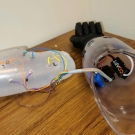
An interdisciplinary team of UC Davis scientists and plastic and reconstructive surgeons is collaborating to help improve quality of life for patients with upper limb amputations. They are utilizing a novel amputation surgical procedure and smart prosthetics to help patients better control their residual muscles, receive sensory feedback and reduce limb pain.
As the pandemic surged in spring 2021, third-year computer science major Shrey Sheladia used the programming skills he learned at UC Davis to help increase India’s vaccination rate. For four months, Sheladia ran an online notification program that helped more than 40,000 people in India receive COVID-19 vaccines by alerting them when a vaccine appointment was available.
Can we optimize how we cool our buildings without compromising campus comfort? This question, the focus of a long-standing partnership between UC Davis Facilities Management and UC Davis Chemical Engineering (Process Systems Engineering), has resulted in savings, greener energy use and published research.
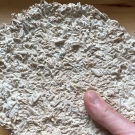
Mycelium, the white filament-like root structure of mushrooms, might be an important building block of a more sustainable world. By growing mycelium with a biomass—anything from coffee grounds to leftover agricultural waste—researchers at UC Davis are creating sustainable structures that can be turned into everything from biodegradable plastics and circuit boards to filters that remove harmful antibiotic and pesticide residues from water.
Machine-learning algorithms, while not intended to replace human doctors, can be powerful tools to help process and make sense of patient data. Electrical and computer engineering professor Chen-Nee Chuah and computer science professor Xin Liu are preparing sensors and algorithms to work alongside doctors to treat patients.