Carlos Daniel Sanchez Espinoza has gone viral for his inspiring work ethic and dedication to his education, earning a 4.6 GPA while working 40 hours a week as a McDonald’s manager. He was accepted to 29 colleges before choosing UC Davis.
UC Davis researcher Rich Whittle joined an international team aboard a parabolic flight to study how microgravity affects blood flow to protect astronauts during long-duration space missions.
UC Davis students in Cyclone RoboSub are taking their autonomous underwater vehicle beyond the pool, using it to support environmental research in open waters and to educate the next generation of robotics engineers.
UC Davis students Aidan Guerra and Andres Mino Cortes discuss advancing to the final phase of the 2026 NASA Human Lander Challenge, the lessons they learned from NASA engineers and how the experience is shaping the future of the Aggie Space Initiative.
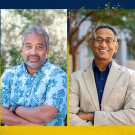
The Departments of Biomedical Engineering and Mechanical and Aerospace Engineering will be led by incoming chairs Sanjeevi Sivasankar and Vinod Narayanan, respectively.
At the 2026 Engineering Design Showcase, three teams were recognized with Sandia Engineering Design Awards for advances in aerospace, clean energy and biomedical engineering.
UC Davis researchers found that red-tailed hawks adjust their wing and tail movements during molt to maintain flight performance despite missing feathers. The findings could improve wildlife rehabilitation practices and inspire more resilient drones and uncrewed aerial vehicles.
UC Davis undergraduate teams captured three of four major awards in the 2025-26 CITRIS Aviation Prize, developing innovative software and simulation tools to support California’s future advanced air mobility network and electric air taxi transportation systems.
The National Science Foundation’s Faculty Early Career Development will fund the assistant professor of mechanical and aerospace engineering’s work investigating the wing movements hawks use to conduct lateral flight maneuvers.
Meet the engineering undergraduate students working at UC Davis Tech Foundry. In this Q&A, Allen Cooke, David Kou and Haelie Tweet share how they are gaining technical skills while helping transform ideas into real-world solutions. Together, their experiences reflect a new chapter for a space that is actively growing.