How One UC Davis Professor Works with Industry to Get Graduating Seniors Workplace-Ready

In a lab at the University of California, Davis, seven teams of materials science and engineering students tinker with, troubleshoot and run experiments on their capstone projects: sensors that capture vibration data from cutting tools, a material to improve the efficiency and reduce the cost of zinc-based batteries and a vacuum-sealed glove for burn wound therapy.
These students are in the final stretch of “Materials Design Project,” the senior design experience of the Department of Materials Science and Engineering, in which they design and prototype a product, device, process or software system. Throughout the three-quarter course, the teams work directly with industry partners, who also serve as mentors, to solve a real need they have identified.
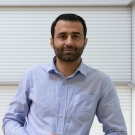
Because of their relationship with industry, this course not only provides students with fundamental knowledge of the engineering design process but also prepares them for what they will encounter in future workplaces, says Assistant Professor of Teaching Amir Saeidi, who oversees the teams.
From requiring weekly update presentations (students practice their oratory skills and receive feedback and questions) to randomly selecting groups (students practice communicating and collaborating with people they have just met, much like in the workplace), Saeidi has made great strides in creating a classroom that acts as a bridge from academia to industry.
“This is workforce development,” Saeidi said. “The mentorship the industry partners provide is from a different perspective than mine. They have a clear idea of the expectations and environments that the students will work in.”
From Burn Wounds to Batteries

In the “Materials Design Project” course, students work directly with industry mentors who sponsor their projects and have keen insight into what the workforce demands of young engineers, namely hands-on experience with communication skills, writing, reports and presentations. This year, seven student teams are working on projects sponsored by six industry partners, including Fralock, Materion, Electroninks and Golden Gate Battery. A new startup is also in the mix, along with UC Davis Health.
Fralock’s project, facilitated by alum Timothy Dyer ’92, who is the executive director of product management and engineering for technical ceramics at Fralock and a member of the department’s advisory board, involves silicon nitride ceramics, which are extremely hard to machine. The tools used to cut through the materials wear quickly and need to be replaced, which slows down the process. The students are using sensor data that capture vibrations from the cutting instrument and are trying to use machine learning to translate the vibration signals into estimates of the tool's wear. That way, operators can change the tools before the break.
Texas-based Electroninks poses two problems for students regarding its particle-less conductive ink, which has applications in electronics, semiconductors and e-textiles. The teams are characterizing how various conditions, such as tension, torque, humidity and liquid exposure, affect the ink's conductivity.
Another project comes from the UC Davis Health Clinical and Translational Science Center, or CTSC, in collaboration with Dr. Jason Heard, an assistant professor in the Division of Burn Surgery at Shriners Hospital for Children. It is based on negative-pressure wound therapy, which comprises an adhesive film that covers and seals the wound, with a drainage tube that connects to a wound vacuum device (or wound vac) that gently pulls fluid and air from the wound, thereby accelerating healing.
“It’s really easy when it’s on the chest or back, but on hands, because of their geometry, they cannot apply the treatment,” Saeidi said. “Dr. Heard has used surgical gloves, but they form holes and cannot hold a vacuum long enough.”
The students are working on a glove prototype that can adhere to a hand's burn wounds, not only maintain the vacuum seal but also keep it for at least five days. This not only enhances patient care but also reduces costs, as it requires patients to spend less time in the operating room. This project is now in its third year with the students; previous groups have identified the appropriate materials and the manufacturing process for the glove. This year’s group aims to create a prototype and apply for a patent.
Saeidi issued a survey to the sponsors, asking how they benefited from the projects, and received a variety of responses: one sponsor appreciates the facilities the students have access to on campus, like the Advanced Materials Characterization and Testing Laboratory, while another simply doesn’t have the equipment to conduct the types of characterization that UC Davis is able to do. Almost all of them, however, said mentoring students was what they enjoyed most.
The Next Experiment

By working with people outside academia, students are exposed to different mentorship styles than they have with their instructors. With sponsors financially backing the projects, the students have greater flexibility and access to more equipment and instruments.
Many students receive recommendations from their mentors, as well as internships and job opportunities. And they gain real-world experience approaching an open-ended problem with many possible solutions and applying their engineering skills.
Despite everything they gain from the class, Saeidi has noticed one thing missing: the opportunity to work on these industry-provided problems in a classroom setting with other engineering students from different majors.
His next step? Create a senior design course that engineering students from all majors and departments can take together. Operating similarly to the “Materials Design Project,” the course would fulfill the college’s senior design requirement and allow engineering students from different backgrounds to apply their unique skill sets to an industry project, mirroring the real-world experiences they can look forward to.
“When I talk to industry and ask for projects, one of the problems I have is that they have a project that needs a materials scientist, a mechanical engineer and an electrical engineer,” he said. “Sometime in the future, one of my goals is to have a class that students from different majors can take that would be even more relevant to the real-world experience of working with and communicating with people from different backgrounds.”