Beyond Soil and Sunlight: An EPiC Reimagining of Accessible Biomanufacturing
With a $3 million grant from the National Science Foundation, a new project in the College of Engineering at the University of California, Davis, will test the boundaries of where and how biomanufacturing is possible, going so far as outer space to investigate those limits.
Led by Distinguished Professor Emerita of Chemical Engineering Karen McDonald, the Engineered Plants in Culture ꟷ Biomanufacturing in Low Resource Environments, or EPiC, project aims to change the future of biomanufacturing, a highly complex technology that requires expensive infrastructure but is essential to sustainably creating products like medicine, food and fuels.
McDonald and her team of collaborators are working to design a 3D-printed handheld bioreactor to cultivate specially selected plants, bringing biomanufacturing to people in areas with little to no resources, including power, personnel, materials and specialized equipment. The team is also investing in training opportunities. The goal? To develop a pathway for more affordable and sustainable biomanufacturing.
Biomanufacturing for low-resource environments does not exist today, says McDonald. Through this research, however, the EPiC team envisions a different tomorrow, bringing this imperative technology to the people who may need it most.
The Plants
Imagine living in an environment with little to no plant resources — a desert, perhaps, or in a habitat on the moon. However, due to new biomanufacturing technology developed for that environment, plants are now available for food and medicinal purposes. One could imagine eating a bowl of rice topped with duckweed salad or creating a vaccine to treat an infectious disease.
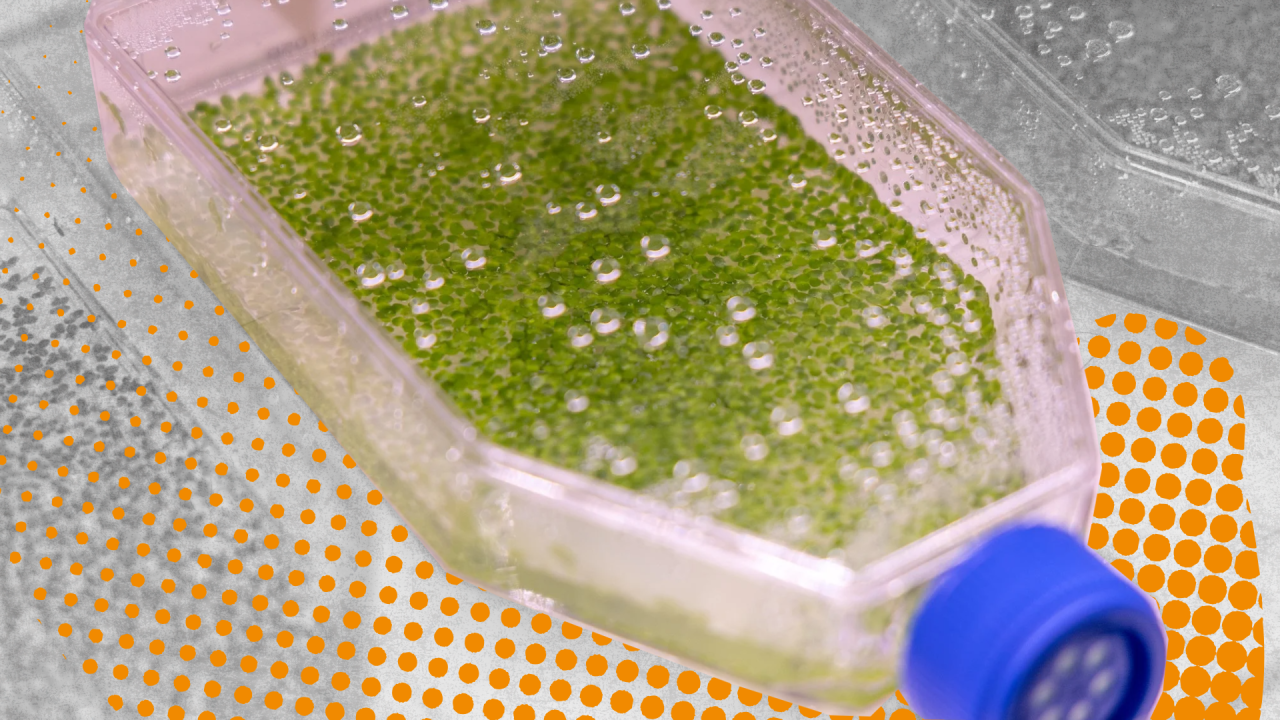
EPiC is experimenting with cultivating duckweed, a subfamily of fast-growing edible aquatic plants, and transgenic rice cell suspension cultures, or rice cells grown in a liquid medium that have been genetically modified to have certain properties, in specially designed bioreactors. Distinguished Professor of Plant Sciences Abhaya Dandekar is also contributing walnut embryo cultures to the project.


These organisms were chosen for multiple reasons. Rice cell cultures, duckweed and walnut embryos are able to make complex products, like recombinant proteins (enzymes, antibodies, etc.) and small molecules, which can be used in various applications, including therapeutics, nutraceuticals, cosmetic ingredients and food additives. Think of them as plant-based factories producing certain molecules for research and industry.
They also have low nutrient requirements: Rice cell and walnut embryo cultures can grow in simple, inexpensive media — a chemical mixture in solid, gelled or liquid form infused with growth-activating nutrients like carbon and amino acids — and don’t require mixing or air sparging (adding oxygen via tiny bubbles), and duckweed can grow photosynthetically using sunlight or artificial light. And they are edible, which means they can grow easily and cheaply in a low-resource environment as a nutrient-rich food source.
McDonald’s team aims to make the plant production systems of these transgenic cultures more efficient and more sustainable when they are grown in specially designed bioreactors, to bring biomanufacturing to previously unprecedented places and people.
The Bioreactor
A typical bioreactor used in biomanufacturing may process 50 to 500 liters on the smaller end (or pilot scale) or 1,000 to 20,000 liters on the larger end (manufacturing scale). They can range from the size of a kitchen appliance (500 liters) to multi-story tanks (20,000 liters). They are usually made of stainless steel, which is heavy, expensive and not sustainable, and they are typically designed for microbial cultures like bacteria, yeast and fungi, not plants.
One of the project’s goals is to design a small, 3D-printed bioreactor specifically for plant-based systems with a process range of 50 milliliters to 1 liter. That’s about the size of a thermos. Compared to a giant steel tank, these water-bottle-sized plastic bioreactors will be much lighter and more sustainable and transportable.


Currently, the EPiC researchers are testing different printing methods and materials to ensure certain parameters are met, like preventing the container from leaking. The team has seen success with stereolithography, or SLA, printing, which requires liquid resin and light to build highly detailed objects.
SLA shows promise due to its higher resolution quality for smaller, finer prints, which helps maintain the structural integrity of the bioreactors, whose dimensions are quite thin. SLA is also ideal for this project because of its use of medical-grade and biocompatible resins. In fact, it is commonly used in the medical field to print dental crowns, custom prosthetic components and ear molds for hearing aids.
The Environments
What if you were able to create food or medicines in such inhospitable environments as deep space or underwater in a submarine?
Biomanufacturing is mainly concentrated in areas with research universities and pipelines to a skilled workforce, regulatory frameworks imposed by entities like the Food and Drug Administration, and readily accessible supply chains for raw materials, bioreactors and cold-chain logistics, including refrigerated storage and transport, insulated packaging and temperature sensors and monitors.
Through EPiC’s research, McDonald seeks to expand the accessibility of biomanufacturing to environments that do not have the necessary infrastructure, from underserved rural communities to war zones. A design for a 3D-printed, handheld bioreactor with growable plant cultures could provide nutrient-dense foods, medicines and diagnostic reagents to people in crucial need.


One such remote, austere and isolated location where this technology could be deployed is space. McDonald and her team have partnered with Axiom Space, which aims to bring the technology to the International Space Station in 2027, where it will be tested in a microgravity environment. Professor of Mechanical and Aerospace Engineering Stephen Robinson is developing a novel robotic arm-based system to simulate microgravity, which will be used to test the plant bioreactors on Earth prior to deployment.
The information gleaned from those experiments could lead to the continued expansion of biomanufacturing technology to the remotest places in the world or even beyond.
The Training
Equally as important to developing a cheaper, sustainable biomanufacturing process is training a workforce that can use it. EPiC partners, including the Australian Research Council Centre of Excellence in Plants for Space, are developing education and outreach initiatives that will introduce the technology to young people in STEM and their educators, creating a pipeline of people ready to step into the new biomanufacturing roles that EPiC’s technology will create.
Undergraduate students will work in teams to design and prototype bioreactors for the three systems — transgenic rice cell cultures, duckweed and walnut embryo cultures — in an EPiC Bioreactor Design Challenge, which will take place between 2026 and 2028.


Technical workshops planned for the summers of 2026-2029, Train-the-Trainer workshops for high school and community college teachers, and K-14 outreach and workforce development will teach the basics of plant genetic engineering and bioreactor cultivation.
These outreach activities will leverage ongoing UC Davis programs, including BioTech SYSTEM, a consortium that works with regional high schools and community colleges, aiming to raise awareness of biotech career paths, provide experiential learning opportunities for students and teachers and improve public science literacy. Robinson’s Human/Robotics/Vehicle Integration and Performance Laboratory, or HRVIP Lab, will also play an important role in education and outreach through its STEM Outreach Academic Reinforcement, or SOAR, program.
These efforts will plant the seeds of biomanufacturing in young minds and build a workforce prepared for a new era of sustainable and accessible technology.