This fall, UC Davis broke ground on a first-of-its-kind bird flight research center, which will allow students and researchers in the College of Engineering and School of Veterinary Medicine to study how birds fly to advance scientific understanding and aerial system design.
Professor Chen-Nee Chuah leads AI/ML efforts within a multidisciplinary team that has received a $6 million grant from the National Institute on Aging to deepen the understanding of the neuropathologic landscape of Alzheimer’s disease, focusing on individuals who identify as Hispanic/Latino.
From healthcare innovation to online communication, the associate professor's research in human-computer interaction aims to create effective, user-friendly tools that address complex societal challenges.
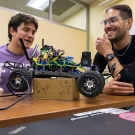
Erik Contreras, a UC Davis mechanical engineering graduate student, paused their degree to pursue a Master of Fine Arts in Design. In this Q&A, Contreras discusses their interdisciplinary journey, creative hacking and their work on autonomous vehicles.
Atrial fibrillation, or AFib, is an irregular and often rapid heart rhythm, also known as an arrhythmia. AFib is the most common type of heart arrhythmia and predisposes patients to an increased risk of stroke. It has a significant global impact — affecting nearly 40 million individuals worldwide and over 6 million in the United States.
With new internet privacy regulations demanding compliance from data systems, computer science researchers from UC Davis and UC Irvine have partnered with a UC Davis law professor to translate the regulations into technical language. The next step to protecting people's privacy is to build a system that ensures existing systems can comply.
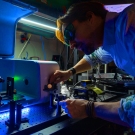
College of Engineering researchers aim to make around-the-clock solar energy a reality with a novel thermophotovoltaic device. Paired with an optical emitter, the device converts the sun’s heat into a concentrated light spectrum that can then be transformed into usable energy.
Oceanographer-slash-computer-scientist Maike Sonnewald discusses using artificial intelligence to build a foundation of knowledge and insight into the ocean’s role in the climate system to better predict long-range weather and help society prepare for climate change.
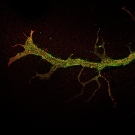
Researchers at the University of California, Davis, are taking the phrase “follow your gut” to a whole new level: They’re creating microfluidic technology that can map out and probe the neural pathways that form the gut-brain axis for the first time.
Dean Richard L. Corsi speaks with Associate Dean of Research Raissa D’Souza about the College of Engineering’s Next Level Research vision and the trajectory of the college’s research enterprise.