Alice Dien Teaches Food Systems Innovation in Newest ‘Hacking 4’ Course
At the end of the winter quarter, six teams of University of California, Davis, students presented their innovative products and businesses — from upcycling waste streams in coffee and legume production to prepping patients for GLP-1 medications — to peers and mentors at the UC Davis Student Startup Center.
It marked the close of “Innovation for Impact: Food Systems,” the newest iteration of the “Hacking 4” class series that asked students to tackle food-related issues with an entrepreneurial mindset. Basically, how do you solve a real problem in a way that attracts investment and creates a positive impact?
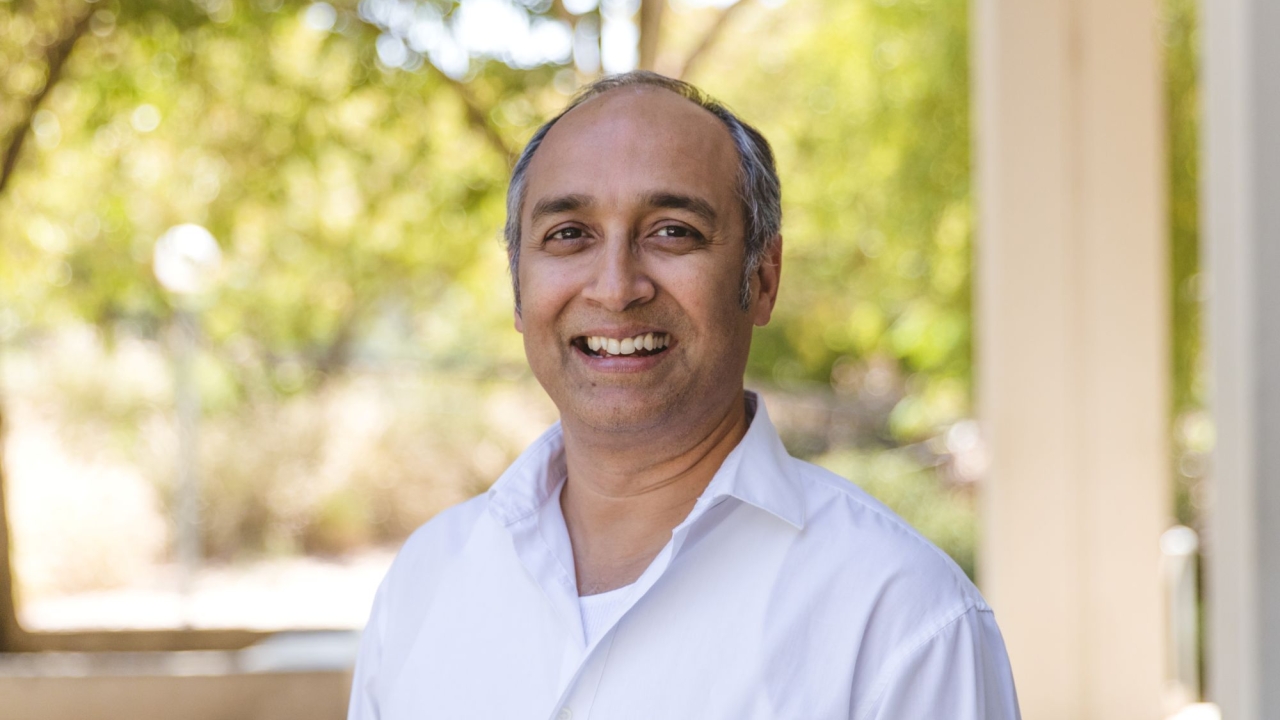
Aaron Anderson, director of the Student Startup Center, and Dana Armstrong Hughes, the talent development coordinator at the Innovation Institute for Food and Health, or IIFH, brought on Alice Dien, a Ph.D. candidate in biological systems engineering at UC Davis, as the associate instructor for the class. Now that the class has wrapped up, Dien reflects on teaching behavior over content, the hard-won lessons that students learned throughout the course, and her proudest instructor moment.
You were recruited by Aaron Anderson and Dana Armstrong Hughes to teach Hacking 4. What was your experience with entrepreneurship prior to this class?

I've been actively involved in the food and ag innovation ecosystem, and I have years of experience teaching project-based courses through the UC Davis D-Lab where I worked with community partners to solve problems related to agriculture, energy and the environment in low-resource contexts. I've seen, through my work in development, that it can be really hard to sustain those kinds of projects. That's how I became more interested in the business side of innovation.
I completed the Business Development Fellowship Program through the Mike and Renee Child Institute for Innovation and Entrepreneurship, and the IIFH TechTransfer Fellowship. I've also held leadership roles in local startups, working on R&D, IP and commercialization strategy.
Meet the Hacking 4 Teams
- NitroPower is developing a system that captures ammonia from the anaerobic digestion of manure and converts it into organic fertilizer, increasing nitrogen-use efficiency in agriculture.
- CoMatter is creating a certification and quality-testing platform that enables agricultural byproducts, such as legume hulls and almond shells, to be used as reliable manufacturing materials.
- Lean Logic is building a digital platform that prepares patients before they begin GLP-1 treatment and supports providers with structured documentation and clinical decision tools.
- Cascarify is developing a shelf-stable, antioxidant-rich coffee cascara syrup for food service businesses, turning a byproduct discarded in massive quantities into a new revenue stream for coffee producers.
- Good Bites is building a platform for medical food that ranks nutrition resources by clinical credibility, so patients managing conditions like gastroparesis can find trustworthy, actionable information.
- Midnight Munchers is tackling student food insecurity at UC Davis by bridging the disconnect between surplus food generators and food recovery organizations.
Can you tell us about the class and how it works?
The class is a collaboration between the Student Startup Center and the IIFH, delivered in partnership with the NobleReach Foundation and using the Lean LaunchPad methodology.
The cohort had 23 undergraduate and graduate students from a range of disciplines. We had six teams developing solutions to challenges spanning agriculture, food technology, clinical nutrition, upcycling, food waste and food security.
Each team worked with an industry mentor, who sponsored the problem statement and met with them weekly. This quarter, mentors came from the Aggie Compass Basic Needs Center, Ajinomoto, Cornucopian Capital, Formation Environmental, Nestlé Health Science, Temporal Ag, and UC Davis startups Caffree and NuCicer. The teams presented their progress during class time and engaged with guest speakers. Of these teams, five have entered competitions or plan to continue their ventures beyond the class.
The core idea behind the methodology is 'get out of the building.’ Instead of developing a venture based on your own assumptions, talk to people who are actually experiencing this problem and iterate from there. In 10 weeks, students conducted over 150 interviews, and some teams visited partner companies in the field.
What do you think is one of the hardest things to learn as a student in the class?
I've had teams present an idea, and the week after, they found a competitor doing the exact same thing. That moment can be very discouraging, so I’ve had to be very intentional about reminding them that where you land with your final presentation or solution matters less than all the invisible things you're learning along the way: presenting under pressure, setting good hypotheses, conducting interviews, sitting with uncomfortable feedback, pivoting when needed, making decisions with incomplete information or handling group dynamics. Those are the skills that make the difference as an entrepreneur regardless of what you build.
What stood out to you as an instructor over the course of the quarter?

Every week, I brought in experienced speakers working in innovation or building companies in the food and ag space. For the first speaker, it was mostly just me and the CEO of a local startup going back and forth. By the end of the quarter, students had taken over the conversation, and the questions they were asking were sharp and specific to their own ventures.
In most courses, you learn content. In this class, you learn behavior. How you see a problem, how you challenge your assumptions, how you listen. Content you can study and memorize, but asking a genuinely good question on the spot? You can't fake that. That was my moment of realizing, okay, they don't need me here anymore. They can hold a room with a CEO and ask the questions that matter.
Another sign was hearing that most students want to continue doing this work beyond the class. Many said in their evaluations that the class was demanding, but the payoff was worth it. That’s the best outcome I could hope for as an instructor.
Why is UC Davis the perfect place to have a course that aims to solve real-world issues in food systems?
UC Davis is one of the world’s leading research institutions for food and agriculture, and the region is a hub for food and agriculture innovation. The opportunity is to connect the talented, motivated students, world-class researchers and the thriving ecosystems of startups, investors and companies all working on similar problems, and this course is one way to do that.
Why, in your opinion, is this course an asset to an education in engineering?

As an engineer myself, I've always had this tension that, fundamentally, an engineer is someone who's trained to use a very technical skill set to solve a real need for humanity. Yet throughout my education, I’ve often found the human side of engineering lacking. To give you an example, I’ve spent years developing improved drying systems for agricultural products, but it took me four years to set foot in my first drying facility and speak to someone who was operating a dryer.
One of the major reasons startups fail is because they are building something no one adopts or pays for. Technical people are especially vulnerable to this, because the drive to build can get ahead of the question of whether it’s worth building. So, being able to connect what the world wants and needs to your expertise as an engineer? It’s definitely worth training for, and the “Hacking 4” series does a lot of that. It also gives students the experience of working on a real problem with an interdisciplinary team and experienced mentors, which is closer to industry than most coursework gets.